Science Exchange vs Scientist.com

Comparison guide

Why biopharma leaders choose Science Exchange over Scientist.com

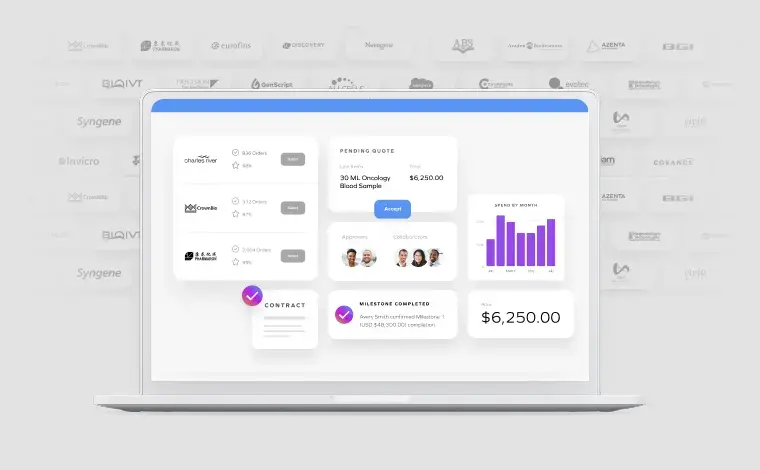
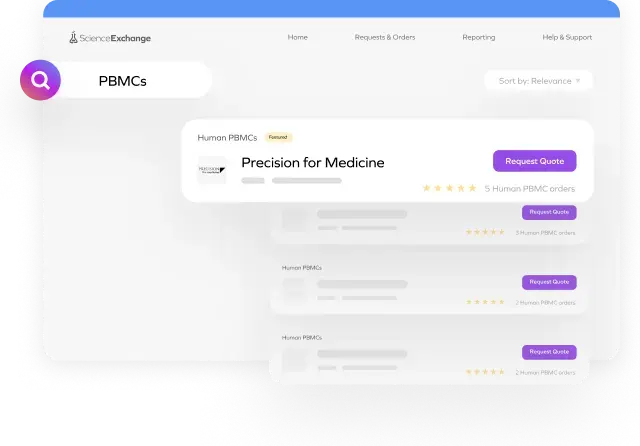
Science Exchange and Scientist.com both connect you to research providers. Science Exchange gives your legal, procurement and finance teams one standard to work from, so outsourced R&D scales with confidence.

ONE SUPPLIER MSANine category schedulesHUMAN BIOSPECIMENSNON-HUMAN BIOLOGICAL MATERIALR&D SERVICESCONSULTINGRWE STUDIESCONSUMABLESSOFTWAREAICLINICAL TRIALSSuppliers cannot attach their own terms to a quote. Your agreements govern automatically.

Five reasons

Five reasons enterprise R&D teams choose Science Exchange

Science Exchange is built for the teams who answer for outsourced R&D after the science is done: legal, finance, procurement, IT and quality.

01 · For Legal

One agreement, standardized terms.

One Supplier MSA with nine category-specific schedules, from R&D services to human biospecimens. IP ownership, confidentiality and data rights are set once and apply to every engagement, including new and niche suppliers. Suppliers cannot attach their own terms to quotes, so legal reviews once, not per quote.

02 · For Finance

Every fee, stated before you commit.

Every fee that applies to an engagement appears in the agreement, in the quote and in the platform before anyone signs. Nothing is bundled into a supplier rate or surfaced after the fact. Finance models total cost of ownership up front. Customers see 21% average cost savings on life science purchasing, and spend visibility surfaces an average of ~$1.25M in hidden costs.

03 · For Procurement & IT

An implementation team that owns your rollout.

A dedicated technical team owns requirements, configuration, testing, training and change management, and integrates with the ERP and P2P systems you already run. Years of deployment experience drive rapid adoption and a shorter time to value. Supplier onboarding moves from weeks to days.

04 · For Scientists

Scientific expertise on demand, and a success lead who owns the relationship.

20+ PhD sourcing experts engage on complex categories when a user needs them, so routine requests move at software speed. Every account also has a named success lead who owns adoption, supplier performance and escalations from go-live through renewal.

05 · For Compliance

AI that acts inside your governance.

The Science Exchange Assistant is deterministic and user-directed: every action traces to a user instruction and leaves an auditable record. It runs on line-level data, so your approval thresholds, category schedules and contract rules apply to every line it touches. Customer data is never used to train external or shared AI models.

Why Line-Level Matters

See it on your spend

We'll model total cost of ownership on a representative year of your external R&D spend.

Line-level data

Not all AI is built on the same quality of data

Science Exchange records every item on every quote and order as its own structured line: service, unit, quantity, unit price, category, supplier, and applicable terms. Most systems stop at the header: a PO total, a supplier name, an attached PDF. Across thousands of suppliers and $1B+ in transactions, that is the data our AI works from.

YOU ASK“What have we paid per sample for whole-genome sequencing across suppliers in the last two years?”HEADER-LEVEL SYSTEM"You spent $400K with Supplier X."SCIENCE EXCHANGEPer-sample price by supplier, compared like for like, with price drift flagged.
breaking-point-icon

See exactly where costs moved, and by how much

Every change order is shown line by line against the original quote. Procurement and finance can pinpoint which assay, sample or hour changed price, challenge increases before approving them, and explain budget variance with evidence instead of estimates.

shield-icon

Pay only for work delivered, and close your books with confidence

Each payment ties to a delivered milestone with a complete audit trail. Finance accrues accurately, never pays ahead of delivery, and applies the same payment terms to every supplier on the platform.

lightbulb-icon

Know what the work should cost before you accept the quote

Every new quote line is compared against similar lines across suppliers and time periods, on both cost and turnaround. Teams negotiate from market evidence and choose suppliers on value, not habit.

goal-icon-1

Protect every discount you’ve already negotiated

Incoming quote lines are checked automatically against your rate cards and contracted discounts. Earned savings apply to every order instead of relying on memory, and each one is documented for finance.

Why does line-level data matter when comparing R&D procurement platforms?

Science Exchange captures each item on a quote or order as a structured record. That lets you benchmark what you pay per unit across suppliers, apply contract and approval rules to individual items, and trace savings to specific purchases. A system that records only PO totals can tell you how much you spent with a supplier, but not whether you paid a fair price for a given service.

Side by side

How do Science Exchange and Scientist.com compare?

 Science Exchange and Scientist.com are at parity on some dimensions, and we say so. Where they differ, the difference lands with legal, finance and compliance.

Dimension
The Science Exchange edge
Legal framework
One Supplier MSA, nine category schedules; supplier terms on quotes prohibited
One agreement, described in its FAQ as "basic terms"
One review covers IP, confidentiality and category-specific risk for every supplier
Fee visibility
Every fee disclosed up front, in the agreement, quote and platform
Fee varies by request and partner; no public buyer pricing
Budget before you sign
Cost savings
21% average on life science purchasing
10 to 15% attributed to AI auto-negotiation
Savings from sourcing and governance, traceable to each line
Implementation
Dedicated enterprise implementation team
Marketplace Director and Customer Success Manager
A proven deployment method with clear ownership
Expert sourcing
20+ PhD experts, engaged on demand
Research Concierge at the start of every request
Expertise where it matters, speed everywhere else
Supplier network
Thousands of pre-qualified partners, including long-tail and specialty providers, plus rapid onboarding of customer-nominated suppliers under the same MSA
Thousands of providers
The long tail is covered and governed, not just searchable
Security
SOC 2 Type II
SOC 2 Type II
Parity

Legal framework

Science Exchange

One Supplier MSA, nine category schedules; supplier terms on quotes prohibited

Scientist.com

One agreement, described in its FAQ as "basic terms"

The Science Exchange edge

One review covers IP, confidentiality and category-specific risk for every supplier

Fee visibility

Science Exchange

Every fee disclosed up front, in the agreement, quote and platform

Scientist.com

Fee varies by request and partner; no public buyer pricing

The Science Exchange edge

Budget before you sign

Cost savings

Science Exchange

21% average on life science purchasing

Scientist.com

10 to 15% attributed to AI auto-negotiation

The Science Exchange edge

Savings from sourcing and governance, traceable to each line

Implementation

Science Exchange

Dedicated enterprise implementation team

Scientist.com

Marketplace Director and Customer Success Manager

The Science Exchange edge

A proven deployment method with clear ownership

Expert sourcing

Science Exchange

20+ PhD experts, engaged on demand

Scientist.com

Research Concierge at the start of every request

The Science Exchange edge

Expertise where it matters, speed everywhere else

Supplier network

Science Exchange

Thousands of pre-qualified partners, including long-tail and specialty providers, plus rapid onboarding of customer-nominated suppliers under the same MSA

Scientist.com

Thousands of providers

The Science Exchange edge

The long tail is covered and governed, not just searchable

Security

Science Exchange

SOC 2 Type II

Scientist.com

SOC 2 Type II

The Science Exchange edge

Parity
Scientist.com information reflects its publicly available materials as of October 2026.

Evaluation guide

Five questions to ask every vendor on your shortlist.

Science Exchange built these from what enterprise legal, finance and procurement teams ask during evaluation. The answers show whether a platform is built for enterprise governance or for transaction volume.

  1. Can we see your contract schedules for biospecimens, clinical and RWE work?
  2. Is your fee published, and can finance model it before we sign?
  3. Who owns requirements, configuration and change management during rollout?
  4. Do routine requests clear without a human handoff?
  5. How are your savings measured, and can we trace them line by line?

What do teams say before switching to Science Exchange?

Science Exchange hears the same four points from teams already running on another platform.

"We already use a marketplace and it works."

Finding suppliers is the easy part. The cost hides in what comes after: supplier terms that differ quote to quote, fees reconciled after the fact, and qualification records spread across systems. Science Exchange keeps contracting, spend and qualification in one governed lifecycle, so overhead doesn't grow with every supplier you add.

"Switching sounds disruptive."

The switch is a project with an owner. Staying is a known cost. A dedicated implementation team runs everything from requirements through change management. Science Exchange integrates with SAP Ariba, Coupa and Oracle, so your existing systems stay in place.

"How do we know the suppliers are qualified?"

Every supplier works under the same MSA and its category schedules. A dedicated Science Exchange team reviews qualifications on a regular cycle, and all qualification and audit records live inside the platform.

"Is this defensible in an inspection?"

SOC 2 Type II certification and GxP-aligned, exportable audit trails are built into the operating layer. An auditor can pull a complete supplier qualification history without manual assembly.

Enterprise Buyer's Guide

Evaluating scientific operations software? Start with a clear scorecard.

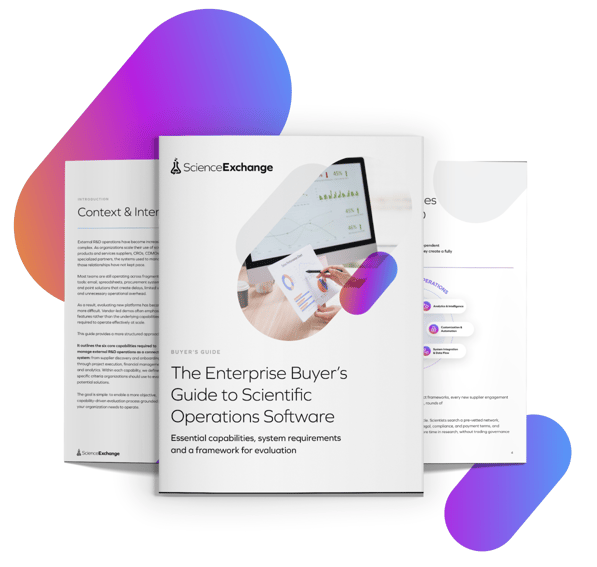
Science Exchange's Enterprise Buyer's Guide to Scientific Operations Software includes a capability scoring matrix, so your team can compare vendors side by side on the criteria that matter to legal, procurement, finance and R&D.

The Enterprise Buyer's Guide to Scientific Operations Software

Six core capabilities. The questions to ask. The evidence to request.

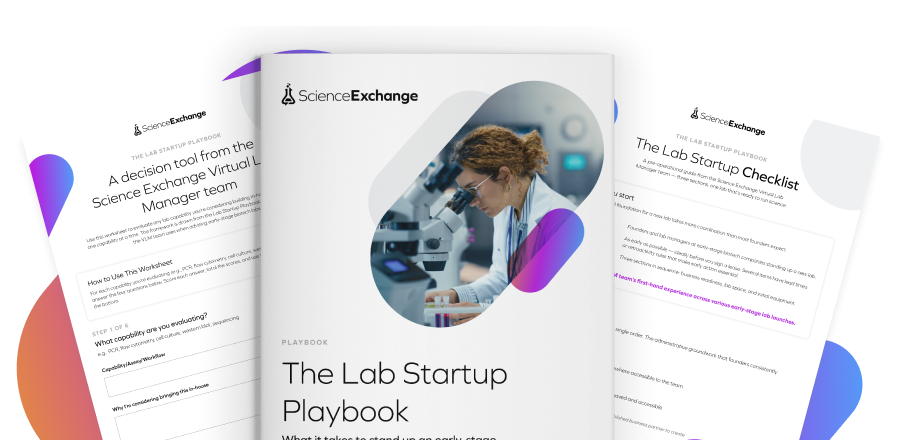
A structured breakdown of what marketplace access, project management, payment processing, analytics, customization, and system integration look like when they work as a unified system — plus the table-stakes baseline every vendor must meet before they earn a score.

Capability Scoring Matrix

Score every vendor side by side across all six capability areas. Download the workbook and use it offline with your evaluation team.

Addressing the real concerns

Questions We Hear Frequently

Who runs a Science Exchange implementation?

A dedicated Science Exchange technical team owns requirements, configuration, testing, training and change management, so your team can stay focused on the science. Every account also gets a named success lead from go-live through renewal.

Can Science Exchange work alongside our existing procurement system?

Yes. Science Exchange integrates with SAP Ariba, Coupa and Oracle, so existing procurement processes stay intact while the platform governs the supplier lifecycle.

How does Science Exchange handle supplier contracts?

Every supplier works under one Supplier MSA with nine category-specific schedules. The schedules cover R&D services, clinical trials, RWE studies, consumables, software, human biospecimens, non-human biological material, AI and consulting. Suppliers cannot attach their own terms to quotes, so your agreed terms govern every engagement.

How are Science Exchange fees structured?

Every fee that applies to an engagement is stated in the agreement, in the quote and in the platform before anyone commits. Nothing is bundled into a supplier rate, so finance can model total cost of ownership before signing.

Does Science Exchange serve emerging pharma, or only large enterprise?

Both. Enterprise teams run the full platform inside their existing systems. Smaller teams without a procurement function can work with Science Exchange’s scientist-led service; learn more at scienceexchange.com.

Is Science Exchange the same as AB Sciex or SCIEX mass spectrometry?

No. Science Exchange (scienceexchange.com) is intelligent infrastructure for life sciences R&D, covering supplier contracting, procurement and spend. It is not affiliated with Danaher's AB Sciex / SCIEX mass spectrometry instruments.

See the difference on your own spend.

Science Exchange will model total cost of ownership on a representative year of your external R&D spend and walk your legal team through every category schedule.